Sustainability
Regeneration startswith biology.
EcoCyan is developing biological technologies that work with natural agricultural systems — connecting photosynthetic microorganisms, living soil and plant biology to support a more regenerative agricultural future.
- Biology
- Soil
- Climate
- Agriculture
The bigger picture
Agriculture is morethan crop nutrition.
Agricultural systems depend on more than the nutrients applied to a field.
Plant roots, microorganisms, soil structure, organic matter, water and climate all interact within one living system.
EcoCyan's sustainability philosophy is based on working with that biology rather than treating agriculture as a purely chemical process.
A productive fieldis also a living ecosystem.
- 01
Plants
Agricultural productivity begins with healthy plant development.
- 02
Soil
Soil is a biological environment, not simply a growing medium.
- 03
Microorganisms
Microbial communities form part of the system surrounding plant roots and nutrient cycling.
Our approach
From inputto ecosystem.
Input thinking
- Apply
- Consume
- Repeat
Biological system thinking
- Microorganism
- Rhizosphere
- Plant
- Soil
- Agricultural ecosystem
EcoCyan's goal is to complement the agricultural toolbox with biological technologies that allow farmers to integrate more regenerative practices over time.
Our objective is not to simplify agriculture into "chemical versus biological." It is to develop practical biological tools that can help farms progressively increase the role of natural biological processes within productive agriculture.
Photosynthetic microorganisms
Nature has been capturingcarbon for billions of years.
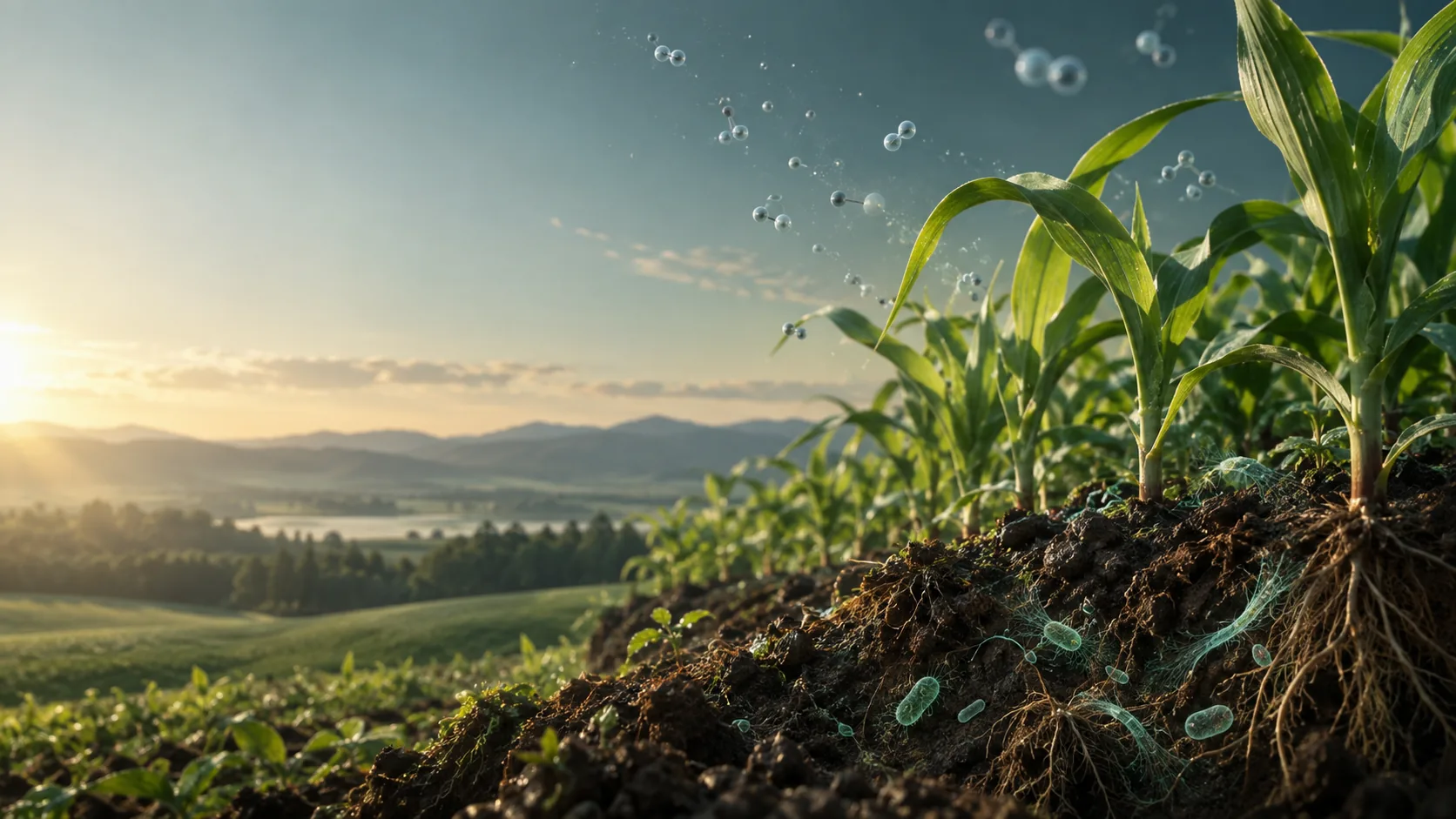
Cyanobacteria are photosynthetic microorganisms.
Like plants, they use light and carbon dioxide as part of their biological metabolism and growth.
EcoCyan is exploring how this photosynthetic biology can contribute to regenerative agricultural systems while supporting the development of biological agricultural inputs.
- 01 Sunlight
- 02 Atmospheric CO₂
- 03 Photosynthetic cyanobacteria
- 04 Biological biomass
- 05 Agricultural system
A description of a biological process, not a quantified carbon-removal claim.
Climate potential
Carbon capture is a process.Climate impact must be measured.
Photosynthetic cyanobacteria naturally incorporate carbon as they grow.
This creates an important biological pathway for exploring carbon-conscious agricultural systems.
However, translating biological carbon capture into measurable climate impact requires rigorous accounting of the full agricultural system.
What we know
- Cyanobacteria are photosynthetic microorganisms
- Carbon is part of their biological growth process
- EcoCyan's mission includes exploring regenerative agriculture through carbon capture
What still requires measurement
- Net carbon balance at farm scale
- Persistence of captured carbon
- Lifecycle emissions
- Crop-specific outcomes
- Methodology for any future carbon-credit system
We believe environmental value should be measured,not assumed.
Below the surface
Healthy agriculturehas a microbial dimension.
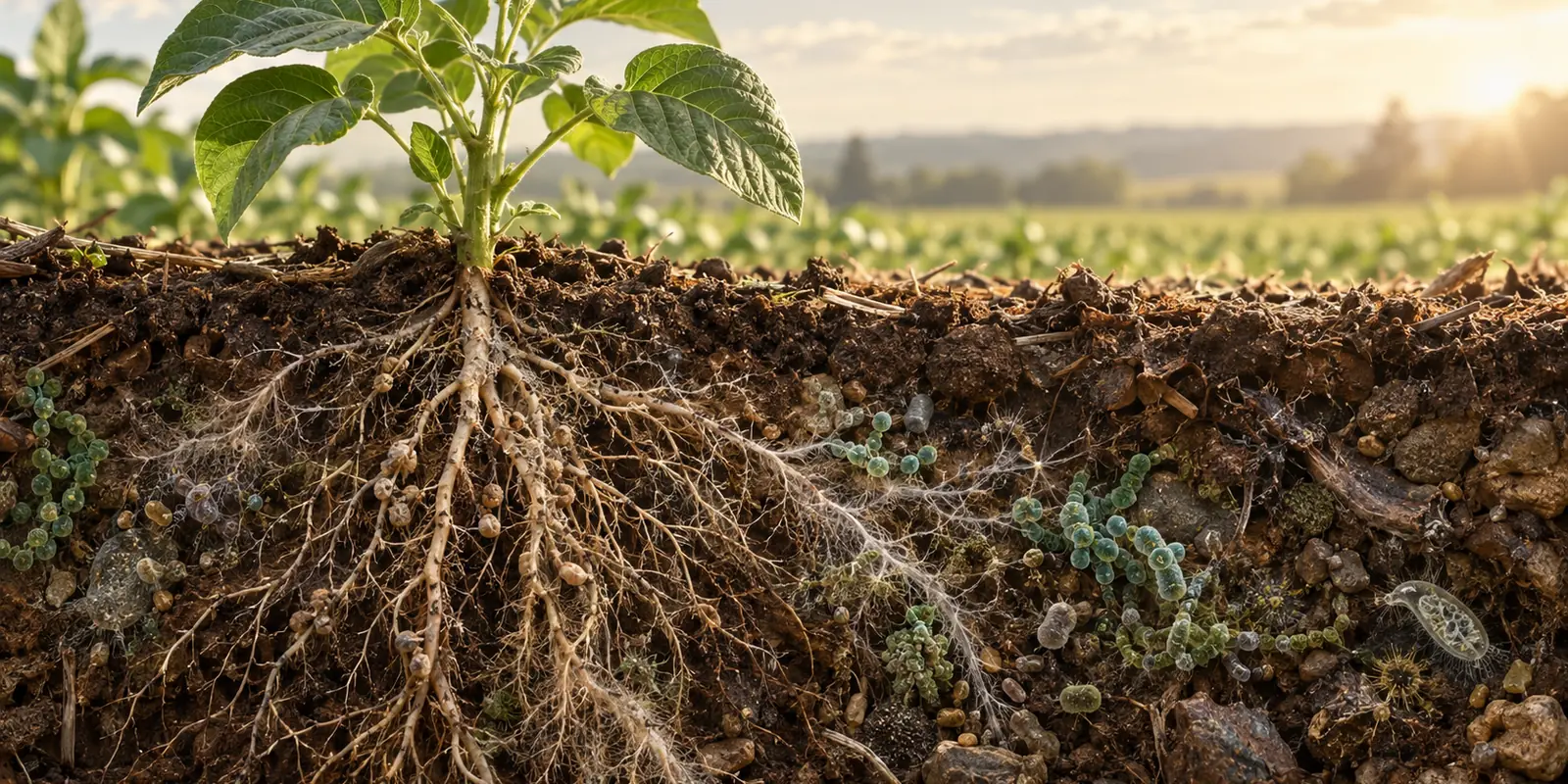
The rhizosphere — the zone surrounding plant roots — is one of the most biologically active parts of an agricultural system.
Plants and microorganisms continuously interact within this environment.
EcoCyan's research explores these relationships and the role that cyanobacteria-associated microbial communities may play in biologically active agricultural soils.
Root
- Microbial diversity
- Nutrient cycling
- Plant–microbe interaction
- Soil biology
Agricultural inputs, reimagined
Reducing dependencythrough biology.
EcoCyan was founded around the goal of developing effective biological alternatives that can reduce agriculture's dependence on synthetic fertilizers.
Our approach is not based on removing every conventional input overnight.
It is about giving farmers practical biological tools that can support a gradual transition toward more regenerative production systems.
- 01 More dependence on conventional inputs
- 02 Integrated biological systems
- 03 More regenerative agricultural practices
One agricultural decisioncan affect more than one outcome.
- 01
Plant
Supporting biological plant development
- 02
Root zone
Understanding plant–microbe interaction
- 03
Soil
Supporting biologically active agricultural systems
- 04
Environment
Exploring how photosynthetic biology may contribute to more climate-conscious agriculture
Practical regeneration
Sustainability has to workfor the farmer.
A regenerative technology has limited value if it cannot function within the economic and operational realities of agriculture.
EcoCyan's long-term approach is therefore built around solutions that can connect environmental value with agricultural performance and practical adoption.
- 01
Practical
Biological innovation must fit real farming systems.
- 02
Productive
Environmental progress cannot ignore agricultural performance.
- 03
Scalable
Regenerative solutions need pathways from research to broader farm adoption.
Sustainability should create value for boththe agricultural ecosystem and the people managing it.
A broader transition
Regenerative agricultureis not one type of farm.
EcoCyan works within a vision that includes organic and biodynamic agriculture while also encouraging conventional farms to explore the integration of biological solutions.
Our ambition is to make regenerative approaches increasingly practical across different agricultural systems.
Organic & biodynamic
Strengthen agricultural systems already built around biological and ecological practices.
Biological transition
Conventional agriculture
Create practical entry points for introducing biological technologies alongside existing farm management.
Sustainability needs science
Environmental ambitionneeds biological evidence.
EcoCyan's sustainability direction is connected directly to its scientific foundation.
The underlying research investigates cyanobacteria and associated microorganisms with biological activities relevant to sustainable agricultural systems.
The published research highlights the potential role of blue-green algae and associated microorganisms in plant development, soil fertility and agricultural arid environments.
- 01
Arid agriculture
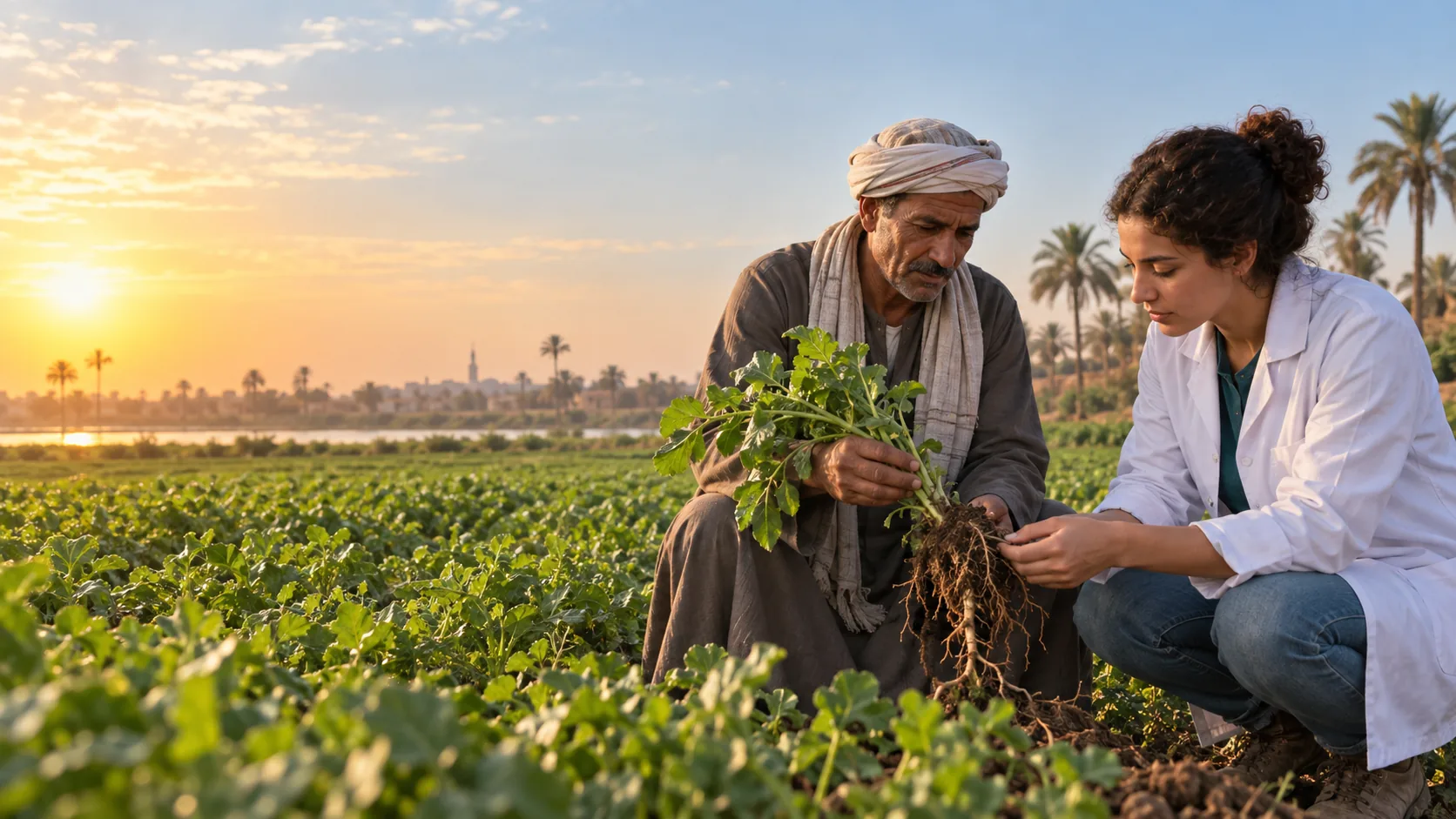
Microorganisms were isolated from Egyptian desert soil.
- 02
Plant-growth-promoting biology
Associated isolates were screened for multiple biological activities.
- 03
Microbial diversity
The research identified diverse microbial communities associated with cyanobacteria.
Global context
Local biology.Global challenges.
EcoCyan's sustainability direction aligns with two United Nations Sustainable Development Goals highlighted in the company's mission and vision.
- SDG 13 Climate Action
- Exploring photosynthetic biology and regenerative agricultural systems with climate-conscious potential.
- SDG 15 Life on Land
- Supporting approaches centered on soil biology, plant health and more sustainable terrestrial agricultural systems.
How we thinkabout sustainable agriculture.
- 01
Biology first
Understand natural biological systems before designing agricultural technologies.
- 02
Evidence before claims
Environmental impact should be demonstrated through data rather than marketing language.
- 03
Farmer value
Sustainability must remain practical and economically relevant to agriculture.
- 04
Responsible scale
Scale biological technologies without losing scientific quality or environmental intent.
Looking forward
Building towardmeasurable impact.
EcoCyan's long-term direction is to move from research-backed biological technologies toward scalable regenerative agricultural systems.
Future and developing areas of work
- Broader crop validation
- Soil and rhizosphere monitoring
- Farm-level biological indicators
- Carbon accounting methodologies
- Lifecycle impact assessment
- Regenerative agriculture partnerships
These are areas EcoCyan is working toward. They are not presented as measurement systems already in place.
Agriculture can workwith nature.
EcoCyan is building biological technologies around a simple idea: better agricultural systems can emerge when science helps us work more closely with the biology already present in nature.