Root development
Stronger root developmentin the referenced trial.
The Cyanoboost treatment significantly increased both root weight and root length in the presented chamomile study.

Science & Evidence
EcoCyan's work is built on microbiology research, molecular characterization and field evaluation.
From cyanobacteria isolated from Egyptian arid soil to crop-level evidence, our approach is to understand the biology first — then evaluate how it behaves within real agricultural systems.
Scientific foundation
At the center of EcoCyan's scientific platform is Nostoc sp. strain NoHu, a nitrogen-fixing cyanobacterium isolated from desert soil at Sekem Farm in Belbis, Egypt.
The underlying research investigated cyanobacteria together with their naturally associated heterotrophic bacteria and evaluated these microorganisms across multiple plant-growth-promoting activities.
The work combined microbiological screening with molecular characterization to better understand the biological diversity surrounding these cyanobacterial systems.
The underlying study investigated a broader microbial ecosystem associated with two cyanobacterial isolates.
This broader microbial perspective is central to EcoCyan's scientific approach.
Agricultural biology is shaped by communities of microorganisms and their interactions — not by one organism acting in isolation.
Study data from the underlying publication, not company performance metrics.
Biological pathways
The associated bacterial isolates were evaluated using microbiological assays designed to investigate direct and indirect plant-growth-promoting activities.
Activities investigated in the research
The study investigated the ability of isolates to grow under nitrogen-deficient conditions.
Associated microorganisms were screened for their ability to interact with insoluble phosphate sources.
The research evaluated potassium-solubilizing activity using specialized microbiological media.
Selected microorganisms were evaluated for siderophore-producing activity using CAS-based assays.
Associated isolates were tested against selected phytopathogenic fungi under controlled laboratory conditions.

Molecular characterization
Selected cyanobacteria and associated bacterial isolates were characterized through 16S rRNA gene amplification and sequencing.
Sequence data were compared with reference databases using BLAST analysis and incorporated into phylogenetic analysis.
NoHu
95.86%
Laboratory findings
The associated bacterial isolates displayed different biological activities across the assays used in the research.
60.3%
Under laboratory conditions
Controlled microbiology studies help identify biological potential.
Field evaluation asks a different question: how does that biology behave within a real crop, soil and management system?
Field evidence
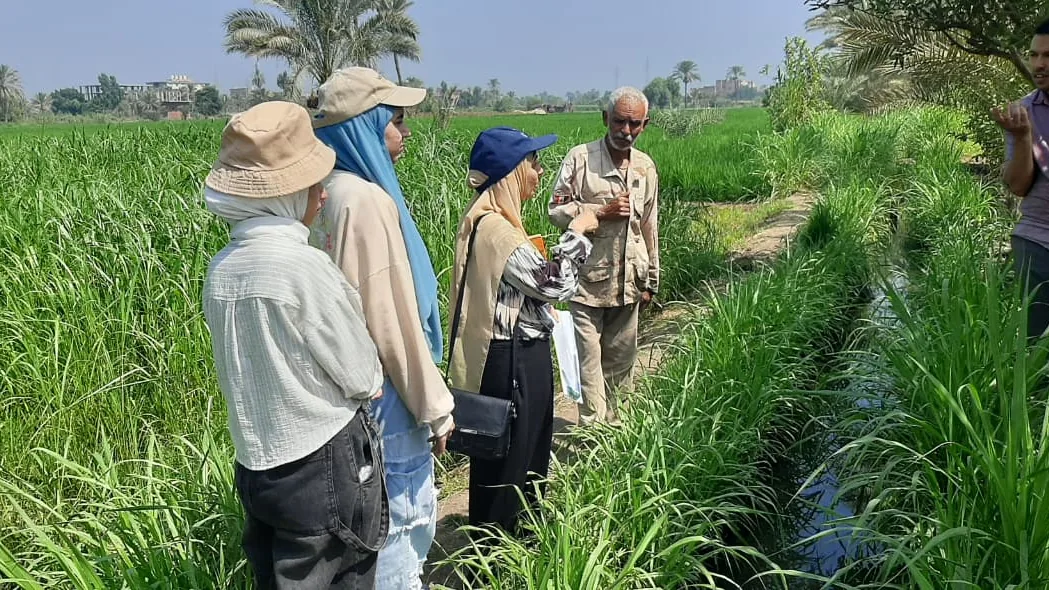
EcoCyan's development work also includes field evaluation.
In the presented chamomile study, the Cyanoboost treatment was evaluated across plant-development, crop-quality and rhizosphere indicators.
Root development
The Cyanoboost treatment significantly increased both root weight and root length in the presented chamomile study.
Essential oil
The Cyanoboost treatment recorded the highest quantity and quality of extracted essential oil within the presented trial.
Rhizosphere
The Cyanoboost treatment recorded the highest diversity of rhizospheric microbial communities in the presented comparison.
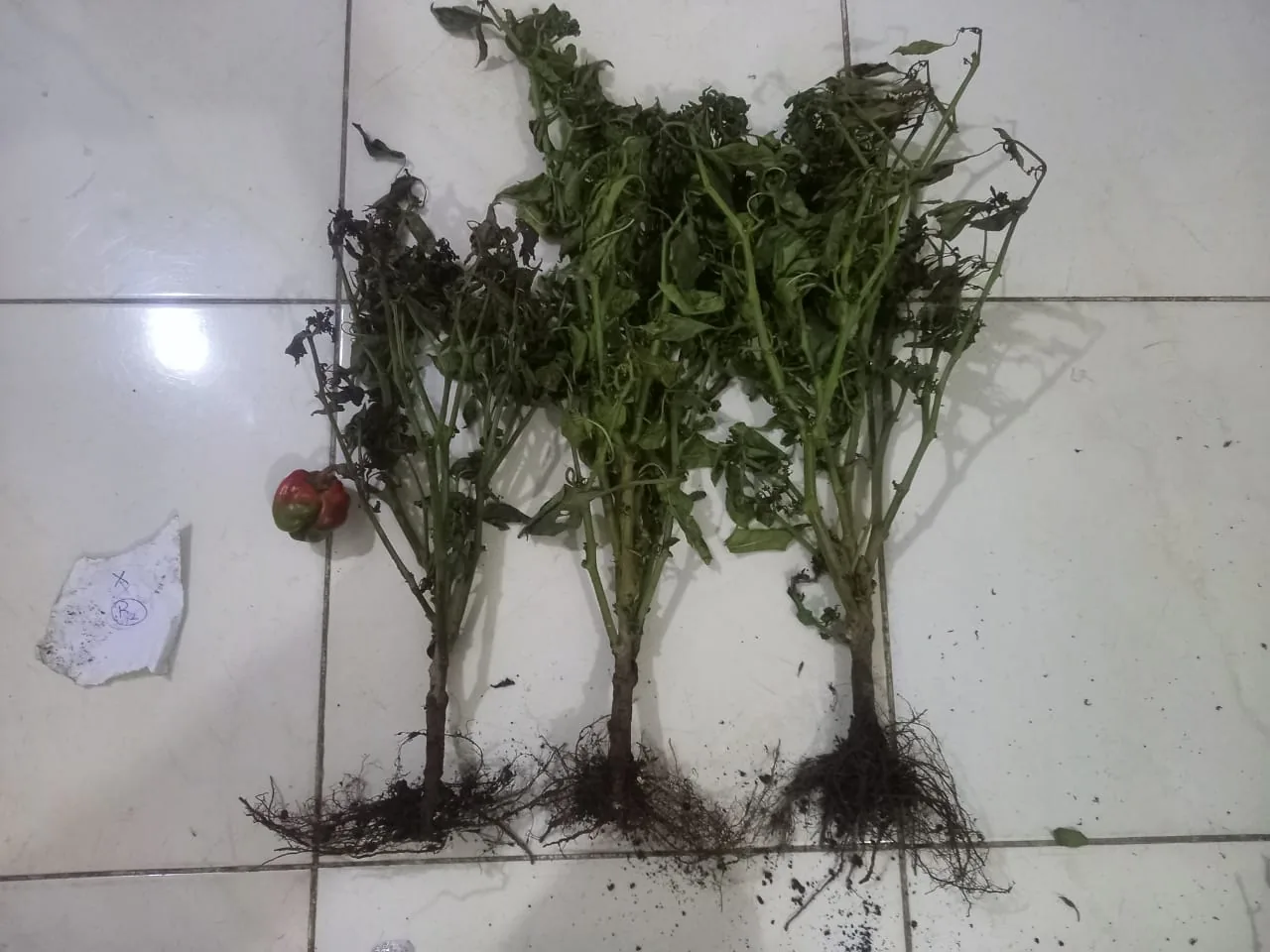
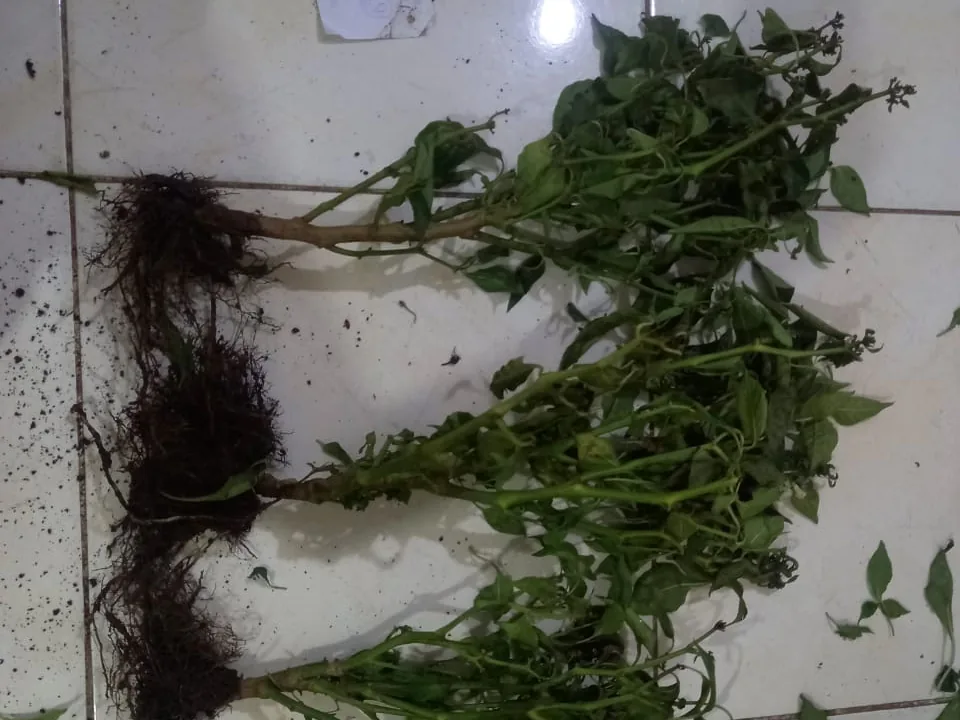
Root systems recorded during field evaluation. These are record photographs from the trial rather than a labelled treatment comparison; the measured outcomes are the ones reported in the referenced study.
0.45%
Apigenin-7-O-glucoside
The Cyanoboost treatment recorded 0.45% apigenin-7-O-glucoside in the presented chamomile study.
The marker was included within the study's evaluation of chamomile extract quality.
Referenced chamomile study result.
Evidence with context
Question
What biological functions can the microorganisms demonstrate under controlled conditions?
Examples
Question
What happens when the biological system interacts with a real crop and soil environment?
Examples
Question
How consistently does the final product perform across farms, crops, soils and management systems?
Commercial performance requires continued field validation and should not be inferred automatically from laboratory observations.
Peer-reviewed research

“Isolation and Characterization of Heterotrophic Bacteria from Blue-Green Algae with Multiple Plant Growth Promoting Traits”
Authors
Journal
Egyptian Journal of Chemistry
DOI
10.21608/EJCHEM.2022.168789.7090
View PublicationThe current research supports EcoCyan's interest in agriculture as a biological system rather than a collection of isolated inputs.
Different microorganisms can contribute through different biological pathways.
Plant performance occurs within a living microbial environment.
The rhizosphere is an important part of the agricultural system being studied.
Agricultural evaluation can extend beyond simple growth measurements to crop-quality characteristics.
Agricultural performance emergesfrom a connected biological system.
Scientific boundaries
From research to application
Cyanoboost builds on EcoCyan's research platform, but developing a reliable agricultural biological involves more than identifying promising microorganisms.
It requires continued work across formulation, quality control, field evaluation and production scale-up.
Build the evidence with us
EcoCyan welcomes collaboration with universities, research institutions, agricultural organizations, farms and biotechnology partners interested in advancing evidence around cyanobacteria, plant–microbe interactions and regenerative agriculture.
Collaboration areas
EcoCyan is working to translate agricultural microbiology into practical biological technologies — with research, field evaluation and responsible scientific communication at every stage.